


CBD for Senior Dogs: Mobility, Stress, Cognitive Aging & Quality of Life
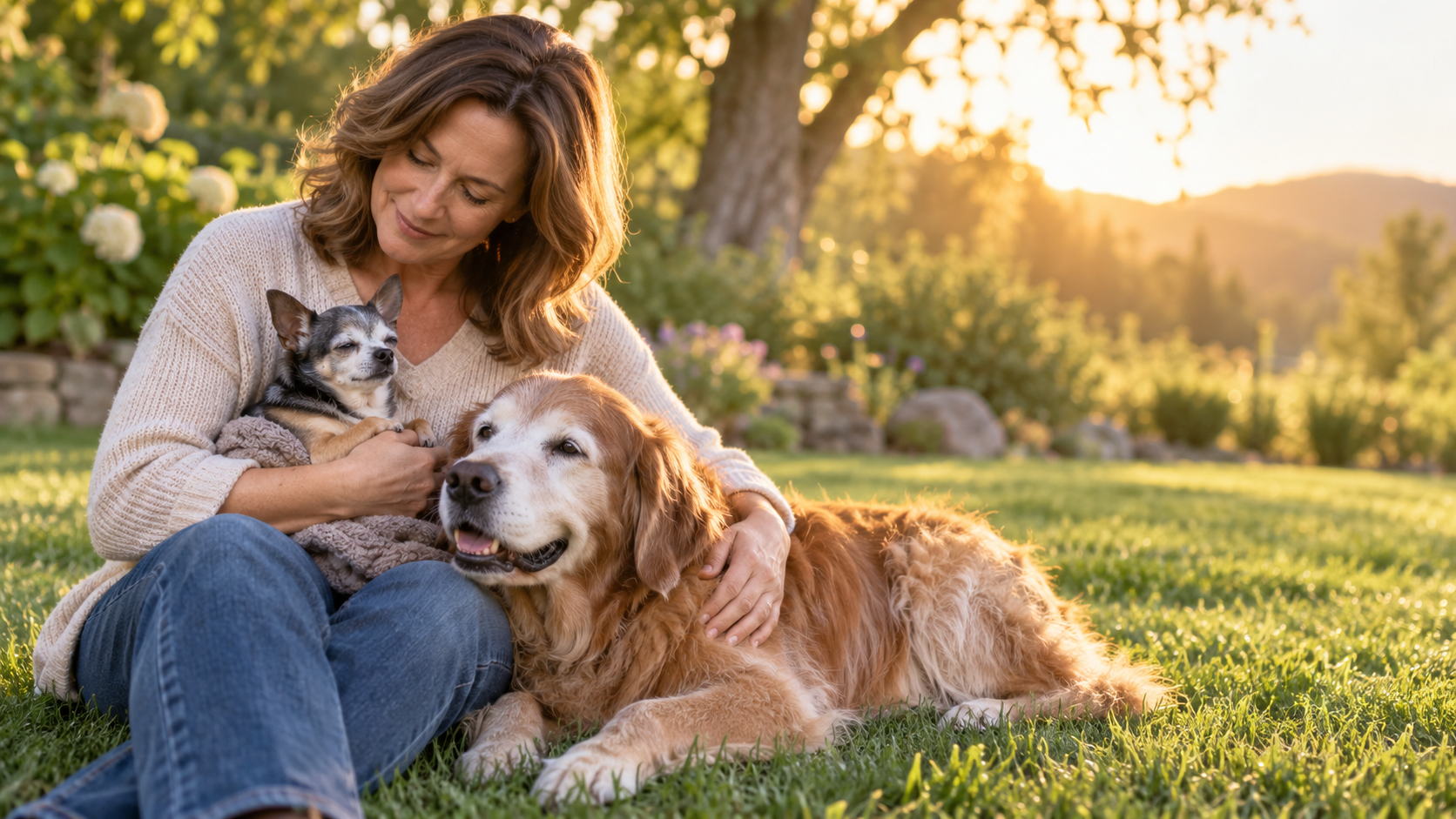
There is something very special about caring for an old dog.
As the years pass, their needs begin to change.
Walks may get shorter. Getting up can take a little longer. They may sleep more during the day, become more sensitive to changes in routine, or seem restless at night.
For some senior dogs, the changes are physical.
For others, they can also be cognitive.
And sometimes, as pet parents, we notice subtle changes before we have a name for them.
Over the past year, I found myself caring for two very different senior dogs, each facing their own challenges.
My daughter's 18-year-old Chihuahua was beginning to show signs that reminded me of sundowning.
And my own female Golden Retriever, who recently passed away at 15 years old, was dealing primarily with mobility changes.
Taking care of both dogs could be challenging at times.
But it was also incredibly rewarding.
And it made me pay much closer attention to what senior dogs really need as they age.
Two Senior Dogs, Two Very Different Experiences
My daughter's Chihuahua began going through a period when evenings became noticeably more difficult.
She would wander.
She sometimes barked when there didn't seem to be an obvious reason.
She had trouble settling.
It reminded me of what many people call “sundowning.”
I gave her Cannafyl Pet as part of her evening routine, and from my perspective, she seemed calmer afterward.
My Golden Retriever's experience was completely different.
Her biggest challenge during her final year was mobility.
Her back hips had become weak enough that going up and down the stairs was difficult.
Getting onto her favorite couch for naps became harder.
Our long walks gradually became much shorter.
But one thing she continued to love was swimming.
Swimming had always been one of her favorite activities, and amazingly, she was able to continue enjoying it almost all the way to the end.
She wasn't as quick as she had once been.
But she was still in the water.
Still moving.
Still doing something she loved.
She received Cannafyl CBD twice a day during this period, and from what I observed, it seemed to help her stay more comfortable and mobile as we adjusted to what her aging body could handle.
I also made changes around our home.
I placed rugs throughout the house and even on the stairs to give her better traction and make getting around easier.
Those little adjustments became incredibly important.
Neither dog's experience is a clinical study.
And I would never say CBD treated my Golden Retriever's arthritis or my daughter's Chihuahua's cognitive decline.
But caring for both dogs made me curious about something bigger:
What does the research actually tell us about CBD and senior dogs?
What Changes as Dogs Age?
Aging affects every dog differently.
Some remain active and sharp well into their later years.
Others may begin to experience changes in:
- Mobility
- Joint comfort
- Sleep patterns
- Vision
- Hearing
- Stress tolerance
- Appetite
- Muscle mass
- Cognitive function
- Daily routines
Older dogs may also be managing several health issues at the same time.
That matters when we talk about CBD, because senior wellness is rarely about one single problem.
It is usually about supporting the whole dog.
Joint Comfort and Mobility
One of the best-studied areas of canine CBD research is osteoarthritis and mobility.
Several controlled veterinary studies have reported improvements in measures of:
- Pain
- Comfort
- Activity
- Mobility
in some dogs with naturally occurring osteoarthritis.
A landmark Cornell University study found improvements in pain and activity measures in dogs receiving CBD, and later studies continued to explore CBD for osteoarthritis and joint comfort.
The evidence is encouraging, but researchers still emphasize that studies remain relatively small and use different formulations and doses.
CBD has not been shown to:
- Rebuild cartilage
- Reverse arthritis
- Stop joint degeneration
But joint comfort and mobility are among the areas where canine CBD research is strongest.
This is one reason my Golden Retriever's experience became so meaningful to me.
Her world changed as her mobility declined.
She could no longer do everything she once did.
So instead of focusing on what she couldn't do, we started looking at what she still could do.
Long walks became shorter walks.
Stairs required help and better traction.
The couch became more difficult to reach.
But swimming?
Swimming was still hers.
And maintaining those activities for as long as possible became part of protecting her quality of life.
Mobility Is About More Than Walking
When people think about mobility, they often think only about whether a dog can walk.
But for senior dogs, mobility affects so much more.
It determines whether they can:
- Get up comfortably after resting
- Move through the house safely
- Climb stairs
- Get into the car
- Reach a favorite sleeping place
- Go outside independently
- Explore
- Play
- Stay involved with the family
Sometimes maintaining quality of life means adapting the environment rather than expecting an aging dog to move the way they once did.
For my Golden Retriever, rugs throughout the house and on the stairs gave her additional traction.
Other helpful adaptations for senior dogs may include:
- Non-slip runners
- Ramps
- Pet steps
- Orthopedic beds
- Raised food and water stations when appropriate
- Harnesses with support handles
- Shorter, more frequent walks
These small changes can make everyday life much easier.
Keep Them Doing What They Love
One of the biggest lessons I learned from my Golden Retriever was the importance of preserving the activities that still bring joy.
For her, that was swimming.
Swimming is a low-impact activity that can allow some senior dogs to move without placing the same load on their joints as walking or climbing.
Of course, every dog is different, and swimming should be appropriate for the individual dog's health and physical ability.
But emotionally, there was something wonderful about watching her continue to enjoy the water even when so many other activities had become difficult.
Senior wellness isn't necessarily about keeping a dog doing everything they did at five years old.
Sometimes it's about finding a new version of the things they love.
Stress and Difficulty Settling
Older dogs may also become more sensitive to changes in their surroundings.
Some may become restless during:
- Car travel
- Separation
- Changes in routine
- Evening hours
- Loud noises
- Veterinary visits
Controlled canine studies have examined CBD during specific stressful situations such as car travel and separation.
Researchers have reported changes in some behavioral and physiological measures associated with stress.
That does not mean CBD has been proven to treat every form of canine anxiety.
But it does give scientists a reason to continue studying how CBD may influence stress responses in dogs.
For senior dogs, this becomes especially interesting because restlessness and anxiety can overlap with cognitive changes.
What Is Canine Cognitive Dysfunction?
Canine Cognitive Dysfunction Syndrome, or CCDS, is an age-related neurodegenerative condition sometimes compared with aspects of dementia in humans.
Veterinarians often use the acronym DISHAA to describe common behavioral changes:
- Disorientation
- Changes in Interactions
- Changes in Sleep-wake cycles
- House-soiling
- Changes in Activity
- Increased Anxiety
Signs can include:
- Wandering
- Pacing
- Getting stuck in corners
- Staring into space
- Barking or vocalizing without an obvious reason
- Sleeping more during the day
- Restlessness at night
- Forgetting familiar routines
- New house-soiling
- Increased anxiety
- Seeming confused in familiar places
Cornell University discusses these signs as part of senior-dog cognitive dysfunction and notes that some dogs show worsening symptoms in the evening or at night, often described by owners as sundowning.
What Is Sundowning in Dogs?
“Sundowning” is not a separate disease.
It is a term often used to describe worsening confusion, restlessness or behavioral changes later in the day.
A senior dog may:
- Pace
- Wander
- Bark
- Appear unsettled
- Sleep poorly
- Seem disoriented
- Have difficulty relaxing
That pattern closely resembled what I observed with my daughter's 18-year-old Chihuahua.
And while Cannafyl Pet seemed to help her settle in our experience, it is important to separate that observation from what has actually been proven.
Has CBD Been Studied for Canine Dementia?
At this time, we do not have strong controlled clinical evidence showing that CBD treats canine cognitive dysfunction or sundowning.
That is the most important point.
CBD has been used by some pet owners of dogs with cognitive dysfunction, and it has appeared in surveys looking at supplements used for senior dogs.
Researchers have also identified CBD use among dogs with conditions such as:
- Dementia
- Osteoarthritis
- Epilepsy
- Cancer
- Hip dysplasia
But owner use is not the same thing as proof of effectiveness.
Researchers still need controlled studies specifically asking:
- Does CBD improve cognition in senior dogs?
- Does it reduce sundowning?
- Does it improve nighttime restlessness?
- Does it affect sleep quality?
- Does it influence anxiety in dogs with CCD?
We do not yet have firm answers.
So Why Might a Dog Seem Calmer?
This is where the discussion becomes interesting.
A senior dog with cognitive dysfunction may also experience:
- Anxiety
- Restlessness
- Pain
- Joint discomfort
- Sleep disruption
- Sensory decline
If CBD influences one of those surrounding issues, a dog may appear calmer even if the cognitive disorder itself has not changed.
That is a much more responsible way to think about it.
For example, if an older dog is uncomfortable from arthritis, improved comfort may help them settle more easily at night.
If they are experiencing stress or heightened arousal, changes in those responses may also affect behavior.
But we should not automatically interpret calming as proof that CBD has improved dementia.
Sleep Matters More Than We Realize
Sleep changes are a major part of canine cognitive dysfunction.
Research in older dogs has found that dogs with higher cognitive dysfunction scores may spend less time in deeper stages of sleep.
That helps explain why some senior dogs:
- Sleep more during the day
- Wake more often at night
- Wander overnight
- Struggle to settle
For pet parents, these changes can be exhausting and emotionally difficult.
And they are worth discussing with a veterinarian.
Is It Aging, or Something More?
One of the biggest mistakes we can make is assuming every behavioral change is simply “old age.”
Nighttime wandering or barking can also be caused by:
- Arthritis or pain
- Vision loss
- Hearing loss
- Urinary problems
- Neurological disease
- Seizures
- Medication side effects
- Metabolic illness
- Anxiety
That is why a veterinary evaluation matters.
A senior dog who suddenly starts wandering, barking or acting confused deserves a closer look.
What Can Help Senior Dogs With Cognitive Changes?
A whole-dog approach is usually best.
Depending on the dog, veterinarians may recommend:
- Consistent daily routines
- Regular gentle exercise
- Mental stimulation
- Puzzle feeders
- Short training sessions
- Nightlights
- Easy access to food and water
- Non-slip flooring
- Orthopedic bedding
- Ramps or steps
- Frequent bathroom breaks
- Dietary changes
- Supplements
- Prescription medications when appropriate
The goal is not simply to extend life.
It is to protect quality of life.
Where Could CBD Fit Into Senior Wellness?
CBD may be one optional part of a broader senior wellness routine.
The strongest current canine CBD evidence relates to:
- Osteoarthritis
- Mobility
- Joint comfort
- Epilepsy
- Some aspects of stress
- Itching and skin comfort
For cognitive dysfunction and sundowning specifically, the evidence remains early.
So rather than saying:
“CBD treats dog dementia,”
a more accurate statement is:
CBD is being studied in several areas that commonly affect senior dogs, including mobility, stress and neurological health, while its role in canine cognitive dysfunction remains largely unproven.
CBD Safety in Senior Dogs
This becomes especially important with older dogs.
Senior dogs are more likely to:
- Take multiple medications
- Have liver or kidney changes
- Have chronic health conditions
- Be more sensitive to sedation
- Metabolize substances differently
CBD has generally been well tolerated in canine studies, but reported effects can include:
- Loose stool
- Vomiting
- Changes in appetite
- Lethargy
- Sedation
- Changes in blood chemistry, including ALP
CBD may also affect enzymes involved in drug metabolism.
That means your veterinarian should know if your senior dog is receiving CBD.
Product Quality Matters
Older dogs deserve consistency.
If CBD is part of a senior dog's wellness routine, look for a product with:
- Clearly identified CBD concentration
- Third-party testing
- Verified THC content
- Batch-specific Certificates of Analysis
- Transparent ingredients
- Testing for pesticides
- Testing for heavy metals
- Testing for residual solvents
- Testing for microbial contaminants
Consistency matters, especially when a dog is receiving CBD regularly.
A Whole-Dog Approach to Aging
Healthy aging is rarely about one supplement.
For senior dogs, some of the most important things are still the basics:
Keep Them Moving
Gentle daily activity can help preserve:
- Muscle
- Balance
- Mobility
- Mental engagement
And remember, movement doesn't always have to look the same as it did when your dog was young.
A shorter walk still counts.
A slow swim still counts.
Getting up and exploring the backyard still counts.
Support Joint Comfort
Watch for subtle signs such as:
- Slower rising
- Hesitation on stairs
- Shorter walks
- Reluctance to jump
Make the Home Easier
Rugs, ramps, stairs and non-slip surfaces can become incredibly valuable.
These changes helped my Golden Retriever continue navigating the house more safely as her back legs weakened.
Keep Their Environment Familiar
Older dogs often do better with predictable routines and familiar spaces.
Support Their Senses
Nightlights can help dogs with declining vision.
Avoid rearranging furniture unnecessarily.
Keep Their Brain Engaged
Short, simple activities can be helpful:
- Sniffing games
- Food puzzles
- Gentle training
- Familiar walks
Stay Ahead of Medical Changes
Regular veterinary exams become increasingly important with age.
Where Does Cannafyl PET Fit?
At Cannafyl, we think senior-dog wellness should be approached thoughtfully.
We do not position CBD as a cure for:
- Dementia
- Arthritis
- Anxiety
- Neurological disease
We believe in providing a high-quality full-spectrum CBD option for pet parents who choose to include CBD as part of their dog's overall wellness routine.
And we believe in being honest about what the science has shown, and what it has not.
The Bottom Line
Senior dogs often experience several overlapping changes at once:
- Reduced mobility
- Joint discomfort
- Changes in sleep
- Increased stress
- Sensory decline
- Cognitive changes
CBD has meaningful canine research behind it in areas such as osteoarthritis and mobility, and emerging research in stress and neurological health.
But when it comes to canine cognitive dysfunction and sundowning, we are still early in the science.
We do not yet have controlled clinical evidence showing that CBD treats dementia in dogs.
What we do have are important questions, and growing interest from researchers, veterinarians and pet parents.
For me, senior-dog wellness became deeply personal while caring for two very different elderly dogs.
My daughter's 18-year-old Chihuahua struggled with wandering, barking and difficulty settling in the evening.
My 15-year-old Golden Retriever struggled with mobility, weaker back hips, shorter walks and losing access to some of the places she loved.
Cannafyl Pet became part of both of their routines for very different reasons.
And alongside CBD came something just as important:
adaptation.
Rugs on the floor.
Help with the stairs.
Shorter walks.
More patience.
And letting a slow swim still be a wonderful swim.
Taking care of both dogs could be challenging.
But it was absolutely worth it.
Because senior wellness isn't necessarily about keeping our dogs young.
It is about helping them continue to feel safe, comfortable, connected and able to enjoy the things they still love.
Sources & Further Reading
-
Cornell University College of Veterinary Medicine — Cognitive Dysfunction Syndrome
Excellent source for signs of canine cognitive dysfunction, including disorientation, nighttime wandering, sleep changes, pacing, anxiety, and the importance of ruling out other medical causes. Cornell: Cognitive Dysfunction Syndrome
-
Gamble et al., 2018 — Cornell University CBD & Osteoarthritis Study
Pharmacokinetics, Safety, and Clinical Efficacy of Cannabidiol Treatment in Osteoarthritic Dogs. This randomized, placebo-controlled crossover study evaluated CBD in dogs with naturally occurring osteoarthritis and reported improvements in clinical pain and activity measures. PubMed: CBD Treatment in Osteoarthritic Dogs
-
Hunt et al., 2023 — CBD and Stress in Dogs
A single dose of cannabidiol (CBD) positively influences measures of stress in dogs during separation and car travel. Researchers found that CBD influenced some behavioral and physiological stress measures, although effects varied and further research was recommended. PubMed: CBD, Separation and Car-Travel Stress
-
Sordo et al., 2023 — Supplements in Dogs With Cognitive Dysfunction
Investigating Owner Use of Dietary Supplements in Dogs with Canine Cognitive Dysfunction. This study surveyed owners of dogs with age-related behavioral changes and highlights how frequently supplements are used in geriatric dogs and why veterinary oversight is important. PubMed: Supplements and Canine Cognitive Dysfunction
-
Dog Aging Project, 2025 — CBD Use in Companion Dogs
Demographic features, health status, and behavioral changes associated with cannabidiol use in the Dog Aging Project. Researchers found that dogs with conditions including dementia, osteoarthritis, epilepsy and hip dysplasia were more likely to receive CBD. This was an observational study and does not demonstrate that CBD treats those conditions. PubMed: Dog Aging Project and CBD Use
This article is intended for educational purposes only and is not veterinary medical advice. Cannafyl PET is not intended to diagnose, treat, cure or prevent canine cognitive dysfunction, arthritis, anxiety or any other disease. Consult your veterinarian before introducing CBD to a senior dog, especially if your dog has a medical condition or takes prescription medication.